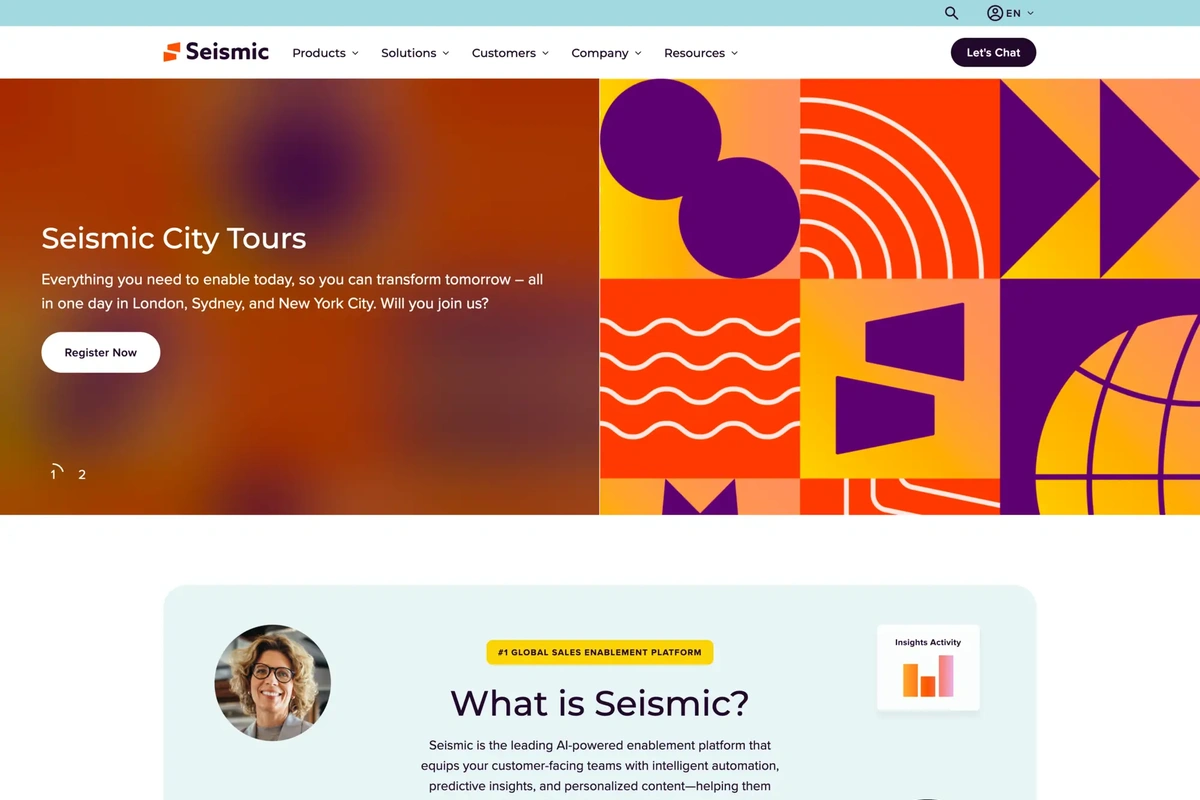
Seismic builds enterprise sales enablement software used by global sales teams. I was hired as a Web Developer specifically for production-level WordPress development (PHP, JavaScript, and custom Gutenberg work), was onboarded and shipping code within two days of starting, and was promoted to Senior Web Developer in 2023. Over three and a half years I worked on multiple projects, from the 2022 redesign through the 2025 migration from WordPress to Sitecore.
The 2022 redesign
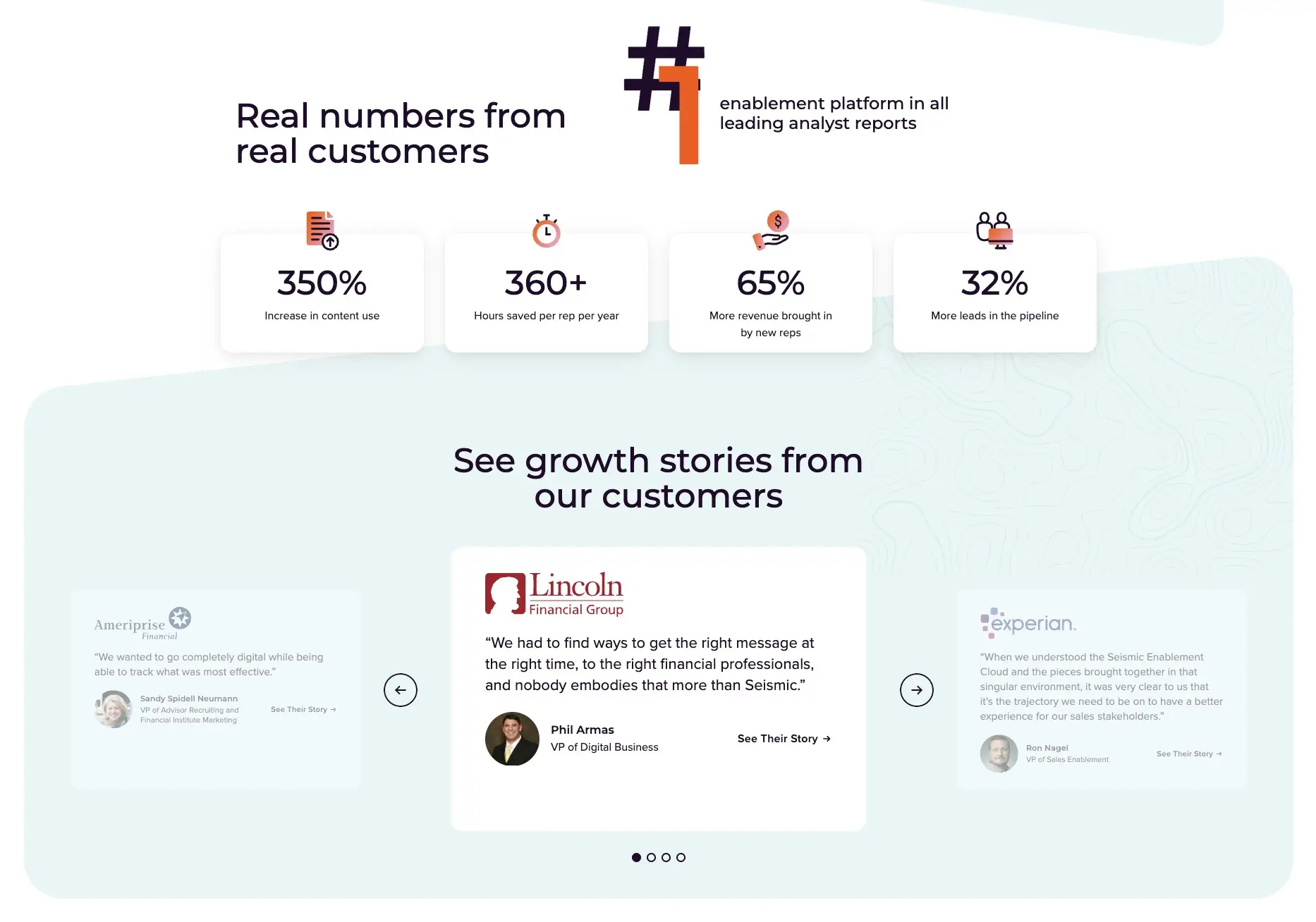
For the first project, the 2022 redesign of seismic.com, we duplicated the site, stripped out the old theme, and rebuilt it on a new WordPress theme with a library of custom Gutenberg blocks. Phase one launched about 40 pages, including the home page and product pages, and kept parts of the old theme on pages we couldn’t finish in time. After the WPML migration we rebuilt the blog and the enablement explainers, both living under resources, bringing the rebuilt site to about 1,000 pages.
Each component went through the same design-to-development cycle:
- Review the design spec and flag any development constraints.
- Implement the component.
- Build a full page with it.
- Send the page back for stakeholder review.
- Address the annotated feedback and close out the markers.
- Ship.
Partway through the project I transitioned from component development to QA lead, reading and resolving comments left by designers and stakeholders across pages already in build, coordinating with the lead developer and the external agency, and pushing updates while the rest of the team focused on core development. We were regularly working 12 to 16 hour days in the final stretch against a hard marketing deadline.
The site launched on time with page loads of 1 to 2 seconds, and the 2022 rebuild drove a 50% increase in site visitors within the first year.
Moving from TranslatePress to WPML
After launch I led the migration from TranslatePress to WPML to support dedicated localized pages for German and French audiences. TranslatePress translated content on the fly on top of the English pages, and translated content kept appearing in the wrong places while pages that should have been translated weren’t. Its interface was also difficult for our production team to use. I planned the migration, executed the content freeze and transfer with three content producers from our agency partner, and trained the French and German page content editors on the new system. We covered how pages needed to be structured and how to deliver translated content so we could get it onto the site quickly.
WPML gave each language its own dedicated page with a correct canonical URL. Our production team could open a page on their own, replace the English text with the translated content, and publish it, and we had zero issues moving pages into other languages from that point forward. We could also create a dedicated page for any new language we needed. Site performance didn’t change, but the site was more stable because pages were no longer being translated on the fly.
Rebuilding the blog
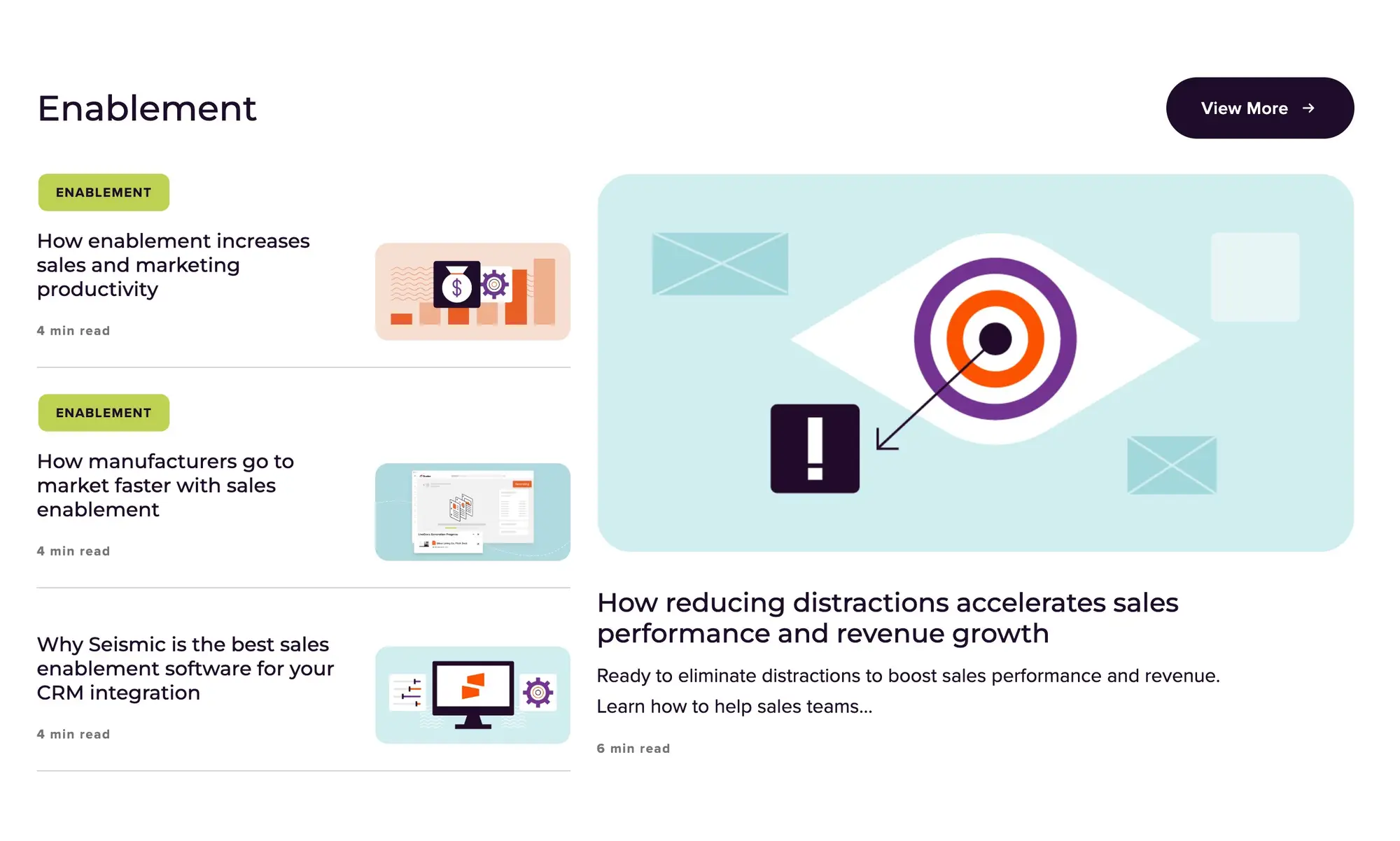
We rebuilt the post template in Gutenberg, building new components for the author byline, a time-to-read estimate calculated from word count, a collapsible author bio with links to their other posts, and lazy-loading of the next post as the reader scrolls. The blog index page was rebuilt with a new grid: a featured most-recent post at the top, editors’ picks, a subscribe component, per-category row layouts with varying column arrangements, and mid-page CTAs with images that broke out of the container.
The ROI calculator
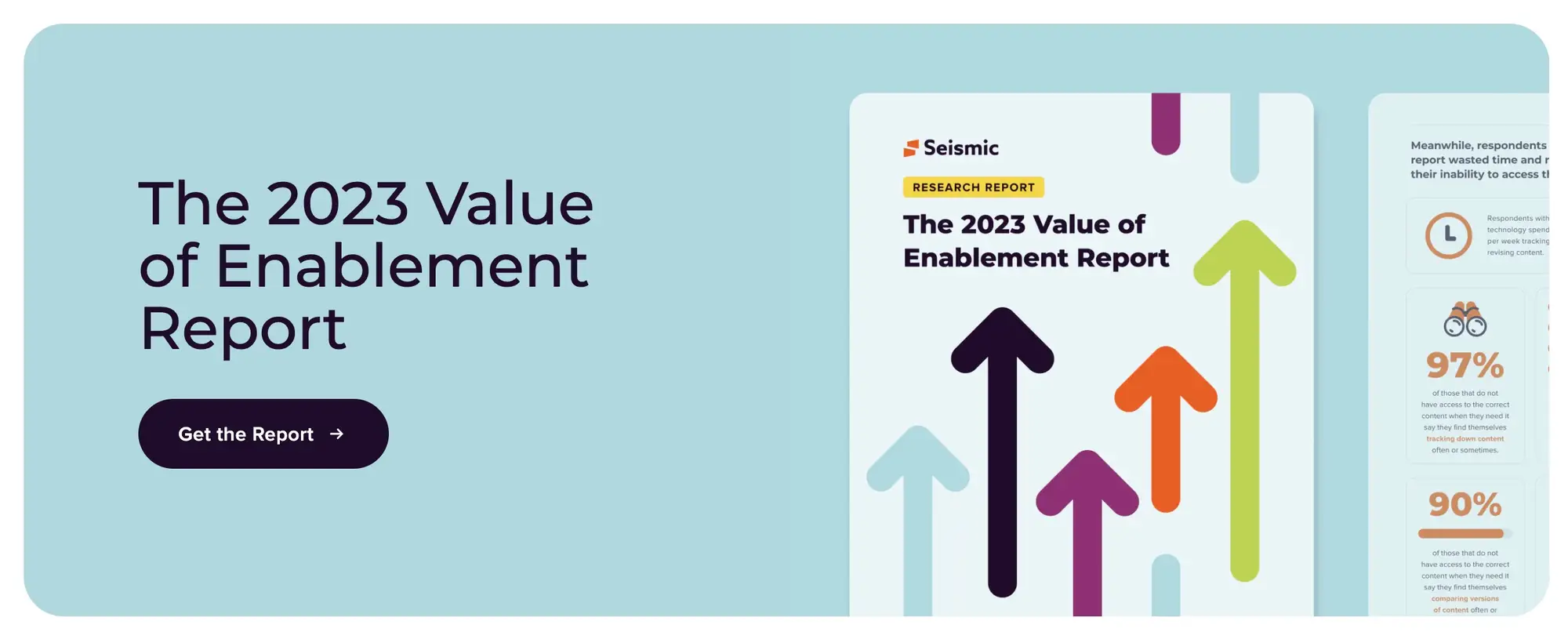
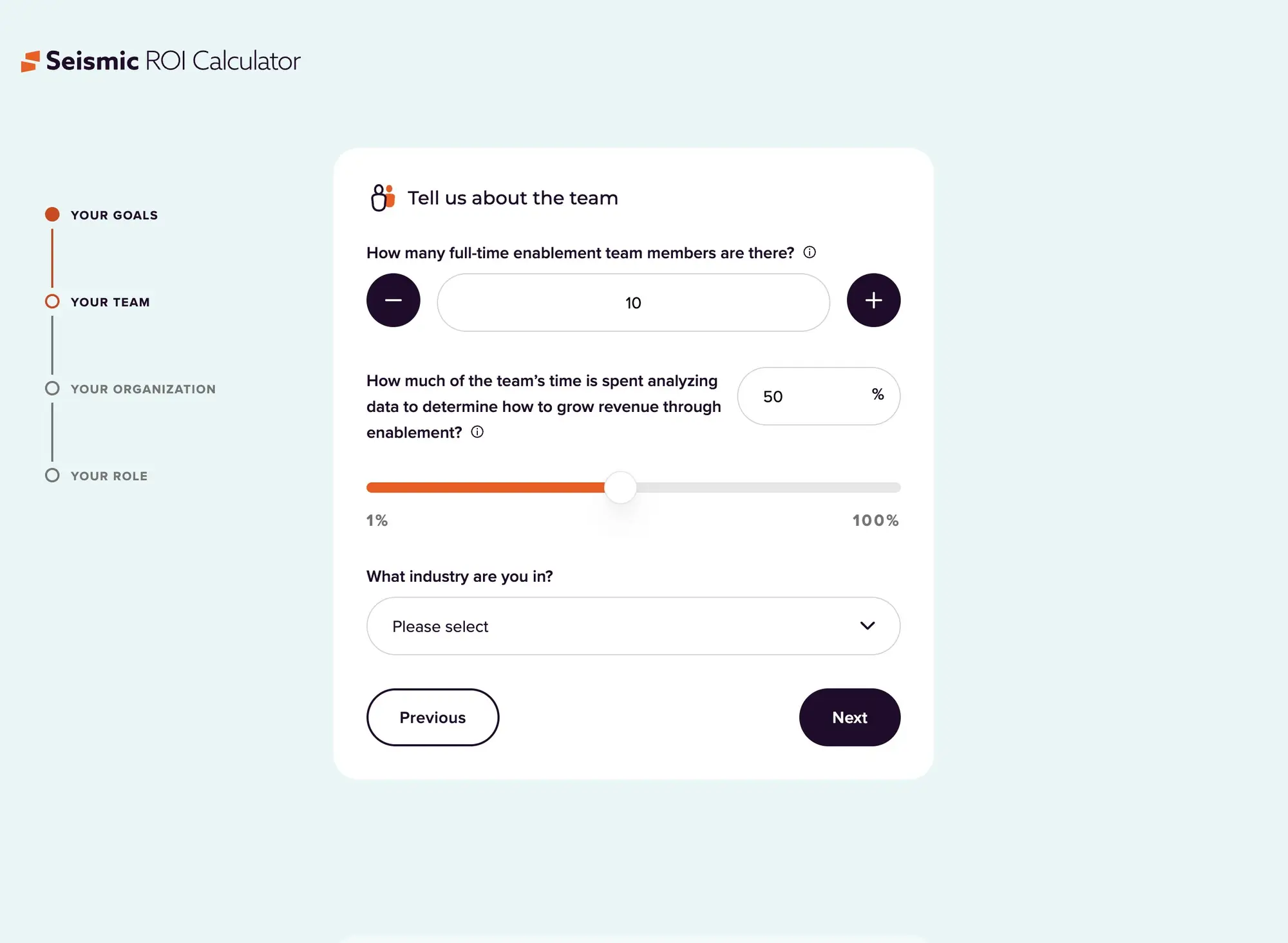
Toward the end of that year we started the ROI calculator, a new project separate from the rebrand that took about two months. It was a four-step conditional form where each field could show or hide other fields based on user inputs. On submission, the data was sent to an API that generated a PDF, emailed it to the user, and triggered a sales notification so the team could follow up with context on what the prospect had submitted.
Handing off from Resources Online to Grazitti
In 2024 our external agency partner, Resources Online (RO), transitioned off the project. RO and I were responsible for documenting the full development stack, which included over 200 Advanced Custom Fields components assigned to Gutenberg blocks, development standards, analytics configurations, production workflows, and media requirements. With that documentation in hand, RO and I trained the incoming team of about 6 people from the India agency, Grazitti, on the operations of seismic.com.
Security
Locking down the site and further limiting access became a high priority in 2024. Wordfence provided the firewall and two-factor authentication, which we required for every user, including content producers and stakeholders. Our hosting provider, WP Engine, let us restrict the admin section, including the login page, to approved IP addresses, and we added the corporate VPN’s IP addresses there so anyone on the VPN could log in. We also put the WP Engine account behind the corporate SSO login system. We replaced our activity log plugin with Melapress WP Activity Log, which recorded every login, page view, and content change in more detail and let us roll back anything that had been modified.
Melapress Login Security set the password rules for every user:
- A minimum password length
- No reusing old passwords
- Password reset links disabled
- A required password reset on first login
- A limit on failed login attempts
- Passwords that expire after a set number of months
I worked with everyone who had login access to the marketing site to get their IP address approved or get them onto the corporate VPN, and to make sure they had two-factor authentication set up and active. After that, I was the person they came to with login problems, such as someone deleting their two-factor authentication app and needing their access restored.
Migrating to Sitecore
In late 2024-25 the decision was made to migrate seismic.com from WordPress to Sitecore to support personalization, A/B testing, and complex content workflows. Most pages had to be rewritten in the Sitecore CMS, because there was no way to migrate the data out of MySQL into the database structure Sitecore uses. In late 2024 and early 2025 I documented the WordPress components again, this time auditing all 200+ of them to determine what needed to be rebuilt in Sitecore, what could be migrated as static content, and what could stay in WordPress. I handed the audit to our new Sitecore agency partner, and the agency and my management team used it to decide to build only the components the new site needed instead of everything from WordPress. The ROI calculator, the maturity calculator, the podcast pages, and the enablement explainer detail pages stayed on WordPress, and I worked with IT to set up a reverse proxy so both systems could serve content under the same domain through and after the cutover. Access to the Sitecore authoring environment was locked down to corporate SSO.
While Grazitti ran the WordPress site, I worked on the Sitecore build with the agency, which was supposed to handle the coding. My first role was reviewing and approving components as the agency finished them, and I was supposed to manage the content migration toward the end of the project. When the content migration was due to start, I was moved to building new components, because the agency had limited hours on the project to build all the ones we needed. I ramped up on Sitecore, TypeScript, GraphQL, and Tailwind under a live deadline and built several components for the blog section, which included spending a weekend reworking what the agency had built. After deciding my weekend rework wouldn’t hold up long term, I threw it out and reworked it again the next day.
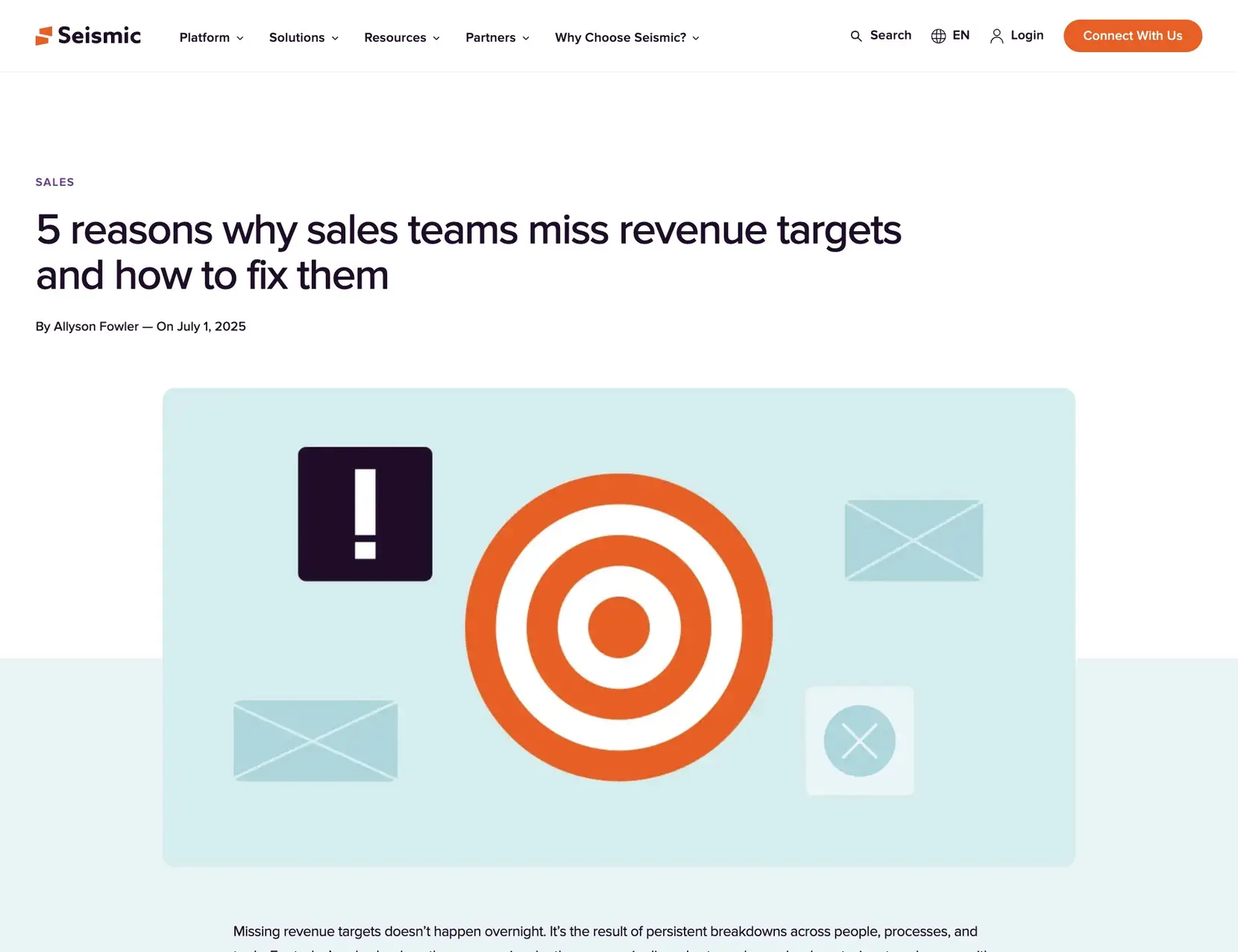
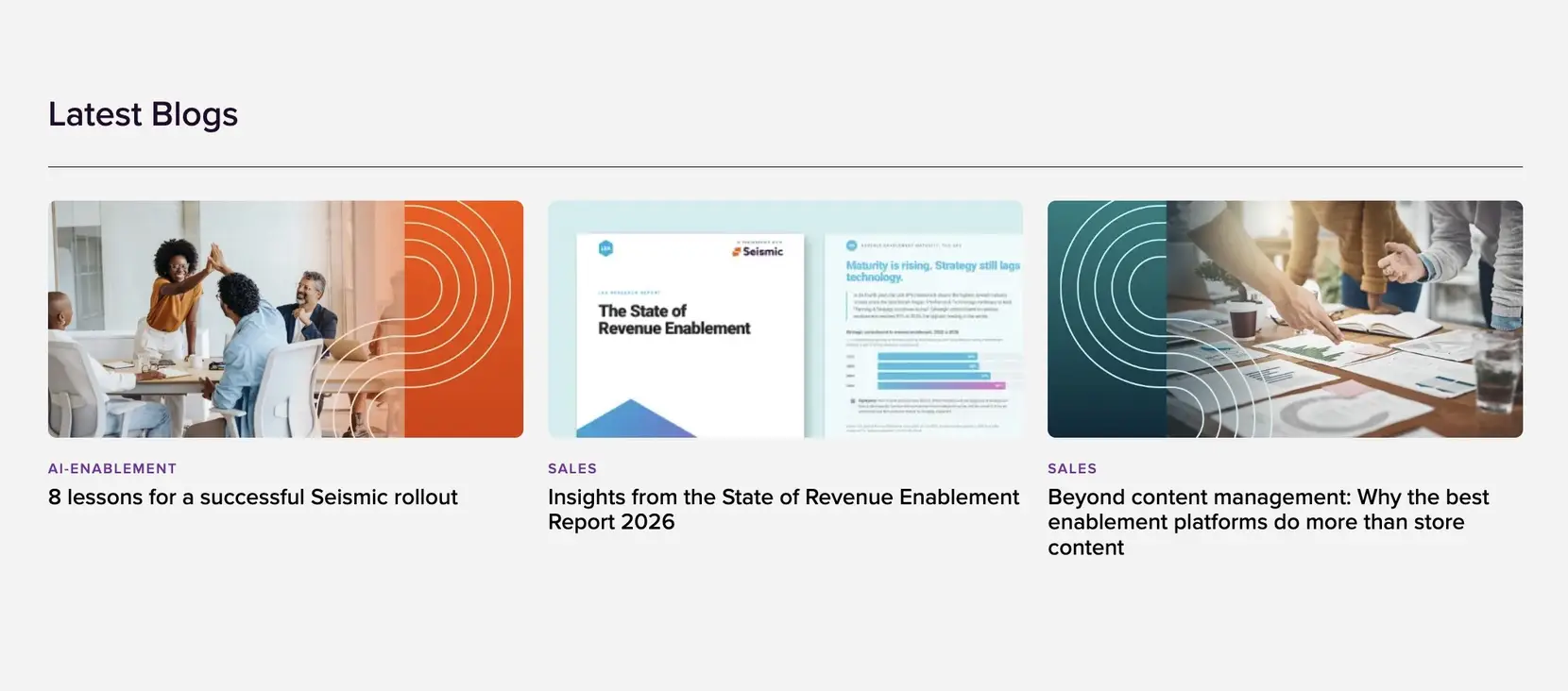
The agency had built the blog on the same template as the resource pages, which would have made future updates to either one much more difficult. My rebuild gave the blog its own template, which made it easier to manage long term and let me write styles targeted to the blog, so it matched what our design team put together instead of reusing everything from the resource pages. It also let me add a listing of three related posts at the bottom of each article, pulled from posts in the same category, which the original template didn’t have. Each card shows the first tag on that post instead of its category, because the category would have repeated the one on the article being read.
Our internal design team expected to review Sitecore components in context on the page, while the agency delivered them one by one, so the design team asked for changes after components were already built. I stepped in several times to explain to the agency how the design team expected components to be handed to them, which smoothed out communication between the two teams.
Page loads on the WordPress site had risen to 2 to 3 seconds as new features were added after 2022, and Sitecore’s server-side rendering brought them back down to 1 to 2 seconds.
In about the last two months of the migration, we onboarded two teams at the same time while we were still building the site. A new Grazitti team knowledgeable in Sitecore joined first so they would know what was being built, and toward the end Seismic hired a new internal team of 6 in its India office to manage the site going forward. We had to get both teams working on parts of the project quickly to help us finish it. Through the build, I answered their questions about how things worked, who was responsible for what, and which internal teams at Seismic were stakeholders for each part of the site, such as the HR team for the career pages and careers portal and the podcast team for the podcast pages. I also introduced them to other groups within Seismic, such as the security team and Cloud Engineering, so they would have a working relationship with them.
We completed the migration and updated all documentation, and after launch there were about two weeks left for my offboarding and the new team’s onboarding. In those two weeks I also handed off the WordPress site, which stayed up behind the reverse proxy to serve the pages that hadn’t been migrated, and the new team became responsible for moving those pages into Sitecore. Before I left, the plan was for them to build the enablement explainers hub page in Sitecore and link it to the detail pages on WordPress until they had time to move those over. I was part of a company-wide reduction in force in July 2025.

Impact: I worked with a cross-functional team of 20+ across development, design, content, SEO, and brand. We rebuilt the entire site, about 1,000 pages, on WordPress starting in 2022, and migrated most of it to Sitecore in 2025. In 2024 Resources Online and I documented the WordPress site before handing it off to Grazitti. In late 2024 and early 2025 I audited the WordPress components again to plan the move to Sitecore, and at the end of the Sitecore build I onboarded a new Grazitti team and a new internal team of 6. Page loads went from 2 to 3 seconds on WordPress to 1 to 2 seconds on Sitecore.